
Grey hair is one of the most searched hair concerns on the internet — and microneedling for grey hair is an emerging topic with a small but genuinely interesting body of evidence behind it. Can needling the scalp actually restore colour to greying hair? Here's an honest look at what the science says, what's plausible, and what's not.
Why Does Hair Go Grey?
Hair gets its colour from melanin, produced by specialised cells called melanocytes located in the hair follicle bulb. As we age, melanocyte stem cells in the follicle gradually deplete or lose their ability to produce melanin. When a follicle runs out of functional melanocytes, the hair it produces grows in without pigment — appearing white or grey.

The process is primarily driven by:
- Genetics: The strongest predictor of when and how quickly you go grey
- Oxidative stress: Hydrogen peroxide builds up in the follicle over time, bleaching melanin and damaging melanocytes
- Nutritional deficiencies: Vitamin B12, copper, iron, and vitamin D deficiencies are all associated with premature greying
- Chronic stress: Research has shown that stress accelerates melanocyte stem cell depletion
- Autoimmune factors: In some cases, the immune system attacks melanocytes
The Microneedling and Pigmentation Connection

Here's where it gets interesting. Microneedling is known to stimulate stem cell activity in the hair follicle — specifically through the Wnt signalling pathway, which plays a role not just in hair growth but also in melanocyte stem cell activation.
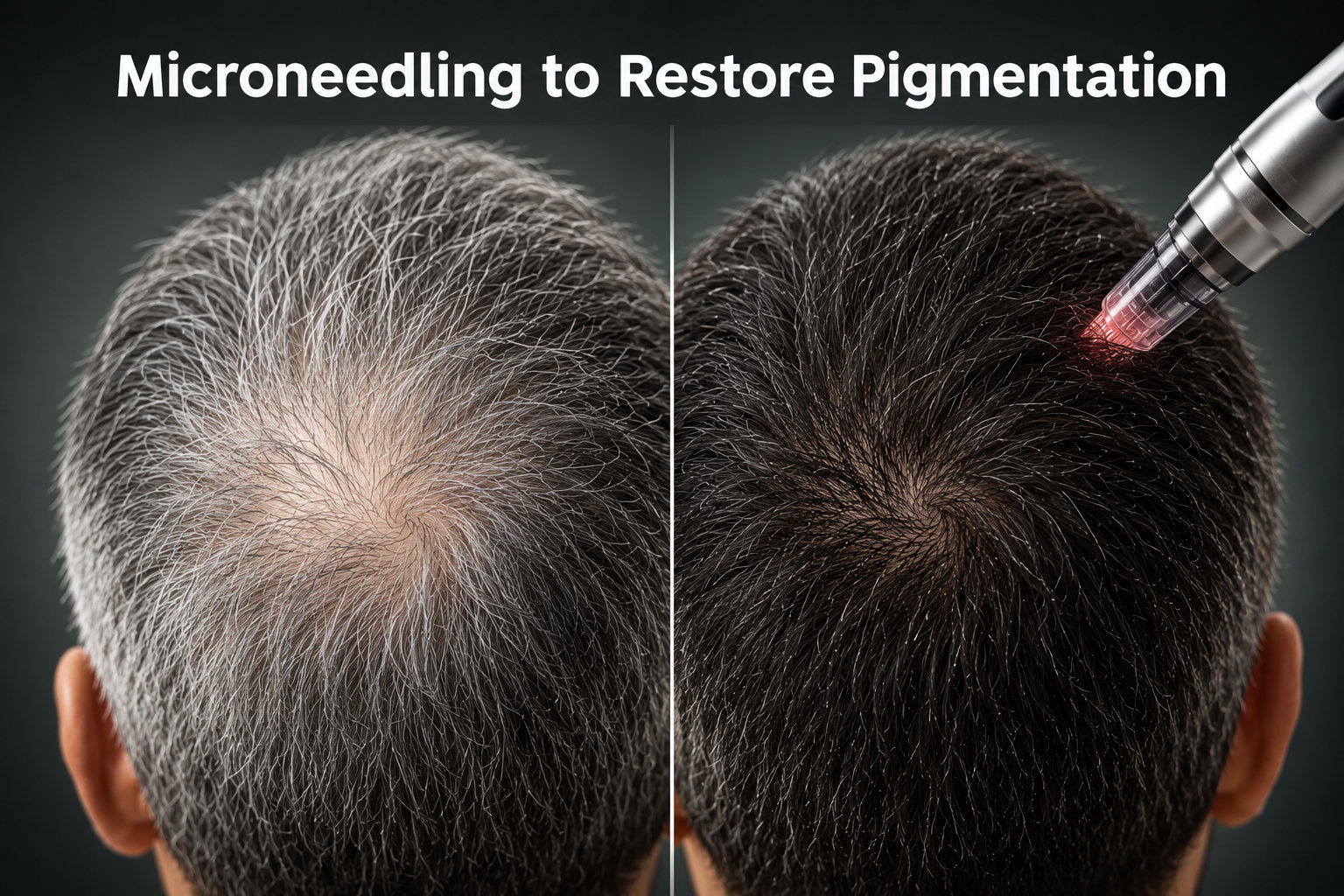
A small number of case reports and anecdotal accounts have documented partial repigmentation of grey hairs following microneedling treatment — particularly in younger individuals with premature greying. The proposed mechanism:
- Microneedling activates Wnt pathway signalling, which may stimulate dormant melanocyte stem cells
- Increased blood flow to the follicle delivers more nutrients to melanocytes
- Reduced local oxidative stress following the healing response may create a more favourable environment for melanin production
What the Evidence Actually Shows
It's important to be clear: the evidence for microneedling restoring grey hair pigmentation is preliminary and anecdotal. There are no large-scale randomised controlled trials specifically studying microneedling for grey hair reversal. What exists is:
- A handful of case reports documenting repigmentation alongside microneedling treatment (often combined with other interventions)
- Mechanistic plausibility based on Wnt pathway research
- Anecdotal reports from users who noticed darker regrowth after starting microneedling routines
This is genuinely interesting — but it's not the same as proven efficacy. Anyone claiming microneedling reliably reverses grey hair is overstating the evidence.
Who Might Benefit Most?
If microneedling does have any effect on hair pigmentation, it's most likely to be relevant for:
- Premature greying in younger people: Melanocyte stem cells may still be present but dormant, making reactivation more plausible
- Stress-related greying: If oxidative stress or stress hormones have suppressed melanocyte activity rather than destroyed the cells, reducing that stress through improved scalp health may help
- Nutritional deficiency-related greying: Addressing deficiencies (B12, copper, vitamin D) alongside microneedling may produce better outcomes than either alone
For age-related greying in older individuals where melanocyte stem cells have been fully depleted, repigmentation is unlikely regardless of treatment.
What to Pair with Microneedling for Grey Hair
If you want to explore microneedling as part of a broader approach to premature greying, the most evidence-informed additions are:
- Vitamin B12: Deficiency is directly linked to premature greying. Supplement if deficient.
- Copper: Essential for melanin synthesis. Low copper is associated with premature greying.
- Catalase supplements: Catalase is the enzyme that breaks down hydrogen peroxide in the follicle. Supplementation is theoretically relevant but evidence is limited.
- Antioxidants (vitamin C, E, selenium): Reduce oxidative stress in the follicle environment.
- Stress management: Given the documented link between stress and melanocyte stem cell depletion, this is one of the highest-impact interventions for premature greying.
For a broader look at supplements that support follicle health, see: Microneedling and Hair Loss Supplements.
The Protocol: How to Microneedle for Grey Hair

If you want to try microneedling as part of a grey hair management approach, use the same protocol as for hair loss:
- Needle depth: 0.5–1.0mm
- Frequency: 1–2x per week at 0.5mm; once per week at 1.0mm
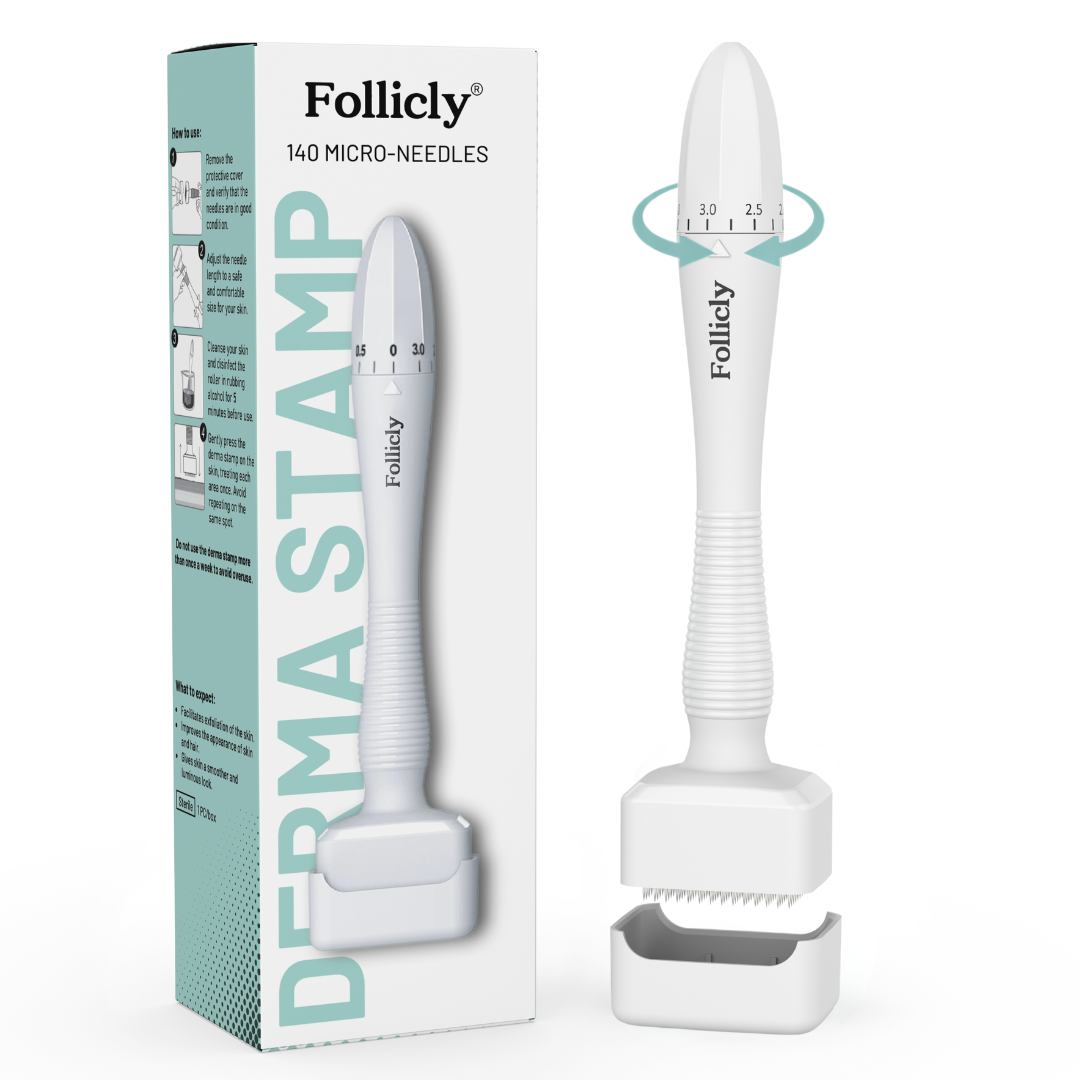
- Tool: The Follicly Derma Stamp for targeted areas or the Follicly Derma Pen for full-scalp coverage
- Topical: A peptide serum or antioxidant-rich scalp serum applied immediately after needling
- Timeline: Give it at least 6 months before evaluating any pigmentation changes
Managing Expectations
Be realistic. Microneedling for grey hair is an area of genuine scientific interest — but it is not a proven treatment for grey hair reversal. The most likely outcome is that microneedling improves overall scalp and follicle health, which may create a more favourable environment for melanocyte function — particularly in cases of premature or stress-related greying.
If you're already microneedling for hair loss, there's no downside to continuing — and any pigmentation benefit would be a welcome bonus. If grey hair reversal is your primary goal, manage expectations carefully and focus on the nutritional and lifestyle factors that have stronger evidence behind them.
The Bottom Line
Microneedling for grey hair is biologically plausible and anecdotally reported, but not yet clinically proven. It's most likely to be relevant for premature greying in younger individuals where melanocyte stem cells may still be present. Combined with nutritional support and stress management, it's a low-risk addition to a broader approach — just don't expect guaranteed results.
For more on microneedling and hair health, see: