
Thin, sparse, or over-plucked eyebrows are a common concern — and microneedling has quietly become one of the most talked-about at-home solutions. The same principles that make derma rolling effective for scalp hair loss apply to the eyebrow area: micro-injuries stimulate blood flow, collagen production, and growth factor release that can reactivate dormant follicles.
But the eyebrow area requires a very different approach to the scalp. Here's everything you need to know.
Does Microneedling Actually Work for Eyebrows?

The evidence is promising, though less extensive than for scalp hair loss. Small studies and case reports have documented eyebrow regrowth following microneedling, particularly in cases of:
- Over-plucked or over-waxed eyebrows where follicles are dormant but not destroyed
- Eyebrow thinning associated with ageing
- Mild alopecia areata affecting the eyebrows
- Post-chemotherapy eyebrow regrowth support
As with scalp hair loss, microneedling works best when follicles are still present but inactive. If follicles have been permanently destroyed by scarring or years of aggressive hair removal, regrowth is not possible.
Key Differences: Eyebrows vs. Scalp

The eyebrow area requires a more cautious approach than the scalp for several important reasons:
- Much thinner skin: The skin around the eyebrows is significantly thinner and more delicate than the scalp. Deeper needles carry a higher risk of bruising, scarring, or post-inflammatory hyperpigmentation.
- Proximity to the eyes: Extreme care is required to avoid the eye area. Never needle within 5mm of the eye.
- Smaller treatment zone: Precision is essential — a rolling tool is not appropriate here.
- Higher visibility: Any adverse reaction (bruising, scarring, hyperpigmentation) is immediately visible on the face.
The Right Tool for Eyebrow Microneedling

A standard derma roller is not suitable for eyebrow use. The rolling motion and wide drum make precise application impossible in such a small, curved area.
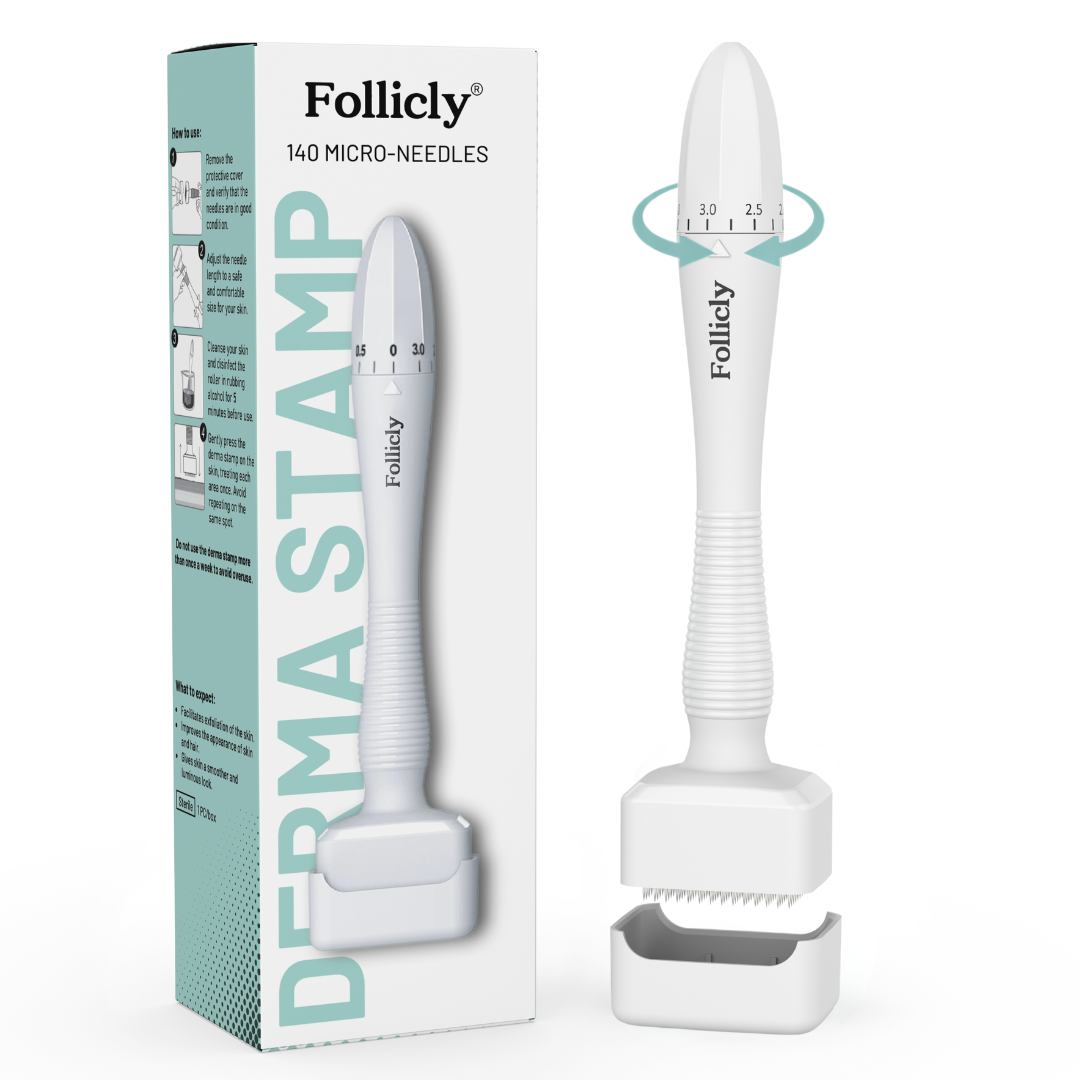
The Follicly Derma Stamp is the correct tool for eyebrow microneedling. Its stamping action gives you precise, controlled placement over the exact area you want to treat — without risk of rolling into the eye area or onto surrounding skin. The Follicly Derma Pen is also suitable and offers adjustable depth, which is particularly useful for the delicate eyebrow zone.
Recommended Needle Depth for Eyebrows
Start conservatively and do not exceed 0.5mm for at-home eyebrow microneedling:
- 0.25mm: The safest starting depth. Enhances absorption of topical treatments with minimal risk. Ideal for first-time users.
- 0.5mm: The maximum recommended depth for at-home eyebrow use. Provides mild follicle stimulation alongside absorption enhancement.
- Above 0.5mm: Not recommended for at-home eyebrow microneedling. The skin is too thin and the risk of adverse effects is too high.
What to Apply After Eyebrow Microneedling

The post-needling absorption window is just as valuable for eyebrows as for the scalp. Options to apply immediately after:
- Minoxidil (2%): The most evidence-backed option for eyebrow regrowth. Use 2% rather than 5% to reduce the risk of unwanted facial hair growth in surrounding areas. Apply precisely to the eyebrow only.
- Castor oil: A popular natural option with anecdotal support for eyebrow growth. Apply with a clean spoolie brush for precise application.
- Peptide serums: Growth factor or peptide-based serums designed for hair growth can be applied to the eyebrow area post-needling.
Important: Whatever you apply, keep it strictly to the eyebrow area. The increased absorption from microneedling means any product that spreads to surrounding skin will also be absorbed at a higher rate.
Step-by-Step Protocol

- Clean the area with a gentle cleanser and pat dry completely.
- Clean your tool with 70% isopropyl alcohol and allow to air dry.
- Work in good lighting with a magnifying mirror for precision.
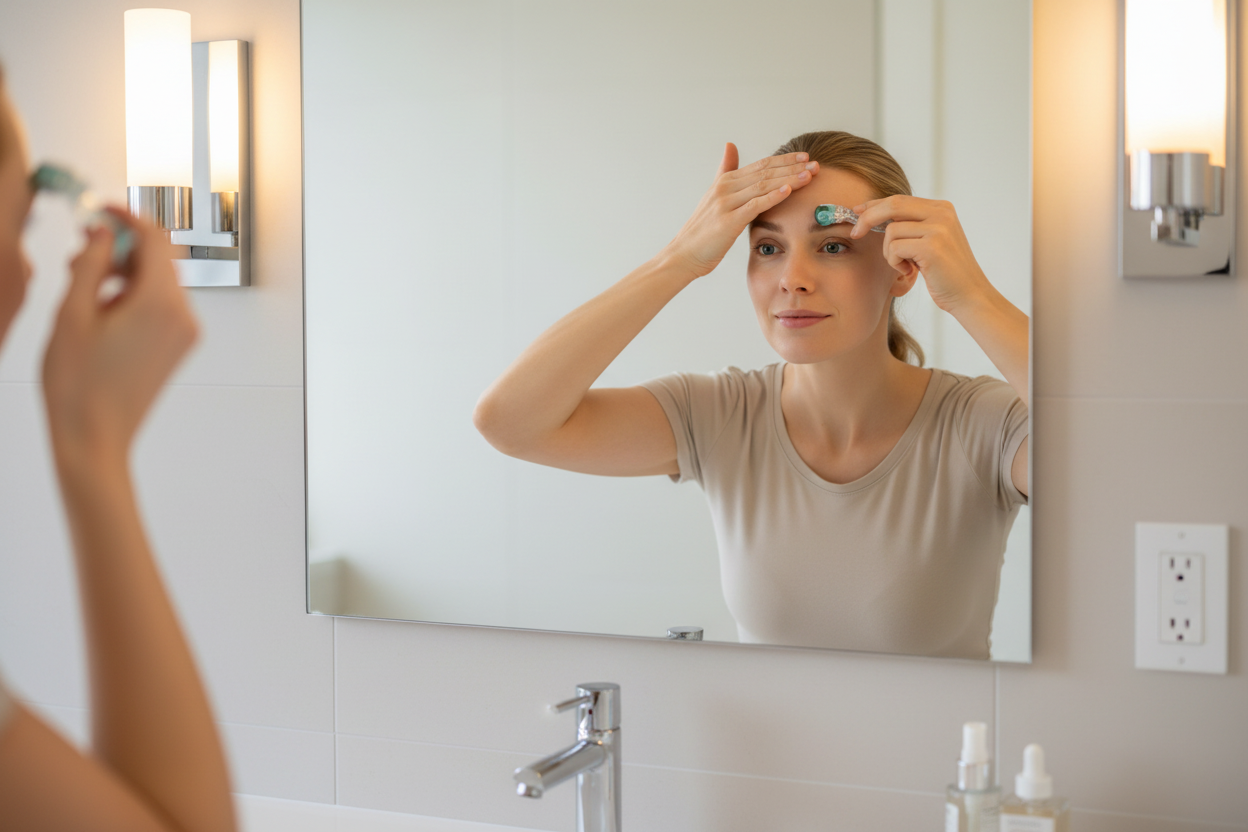
- Stamp gently along the eyebrow in the direction of hair growth, covering sparse areas. Use very light pressure — the skin here is thin.
- Stay at least 5mm from the eye. Do not needle the eyelid or the area directly beneath the brow bone.
- Apply your topical immediately after, using a clean spoolie or fingertip for precise placement.
- Frequency: Once or twice per week at 0.25–0.5mm. Allow 48–72 hours between sessions.
What Results to Expect
- Month 1–2: No visible change. Follicle stimulation happening beneath the surface.
- Month 2–3: Fine new hairs appearing in sparse areas. Existing hairs may appear slightly thicker.
- Month 4–6: Meaningful improvement in eyebrow density in responsive cases.
Results depend on whether follicles are still present and active. Eyebrows that have been sparse for many years due to aggressive removal may have permanently inactive follicles in some areas.
When to See a Professional
If you have significant eyebrow loss due to alopecia areata, thyroid conditions, or other medical causes, consult a dermatologist before starting at-home microneedling. These conditions may require medical treatment alongside or instead of microneedling.
Safety Summary
- ✅ Use a derma stamp or derma pen only — no rollers
- ✅ Maximum 0.5mm depth
- ✅ Stay 5mm+ from the eye at all times
- ✅ Apply topicals precisely to the eyebrow only
- ❌ Do not needle over active skin conditions, cuts, or irritation
- ❌ Do not use 5% minoxidil — stick to 2% for the face
For more on microneedling technique and aftercare, see:
- Scalp Microneedling Aftercare Guide (principles apply to eyebrows)
- How to Clean Your Derma Stamp or Pen
- Best Microneedling Needle Size for Beard Growth (similar facial microneedling principles)