
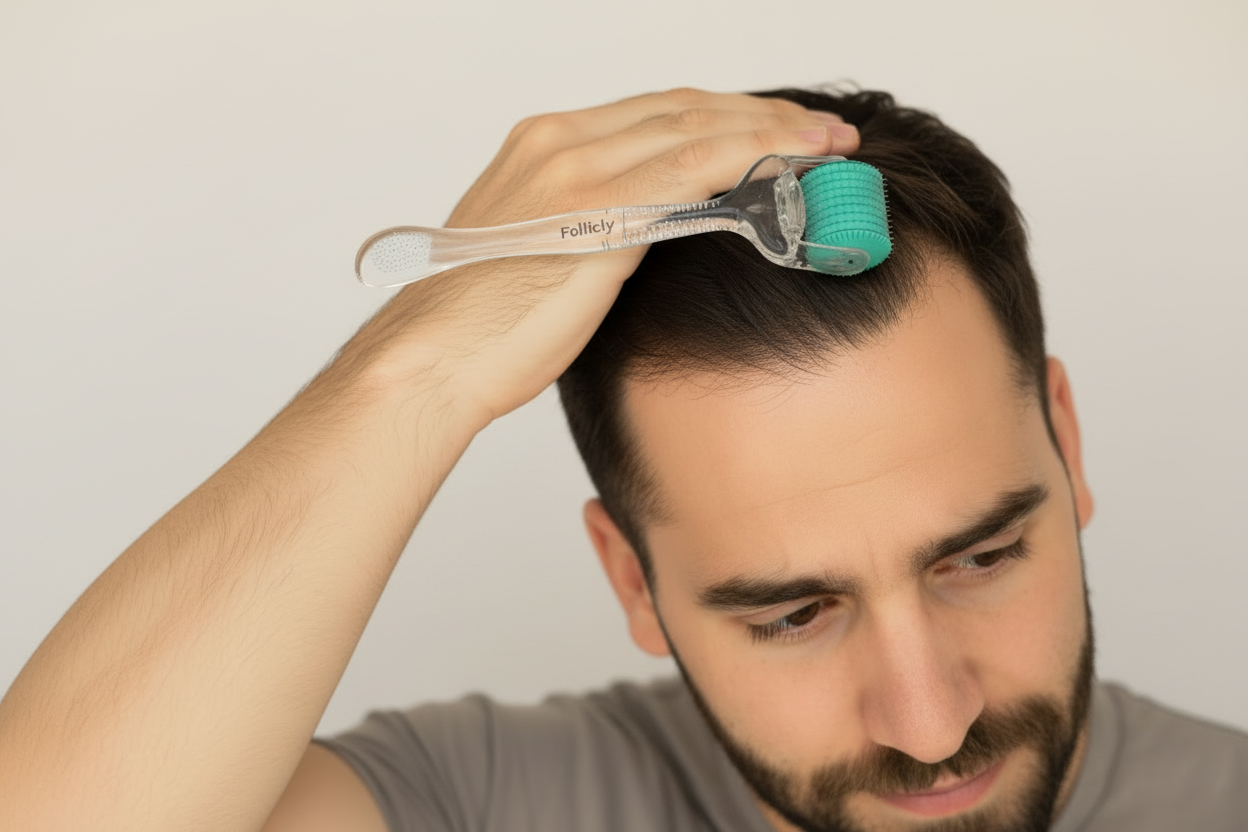
A sensitive scalp doesn't automatically disqualify you from microneedling — but it does mean you need to approach it more carefully than someone with a resilient scalp. With the right needle depth, frequency, and aftercare, most people with scalp sensitivity can microneedle safely and effectively.
Here's how to adapt your approach if your scalp is prone to irritation, redness, or reactivity.
What Causes Scalp Sensitivity?

Scalp sensitivity can stem from a range of causes, and identifying yours helps you make better decisions about microneedling:
- Dry scalp or dehydration: A compromised skin barrier is more reactive to any stimulus, including needling.
- Seborrheic dermatitis: A common condition causing flaking, redness, and itching. Microneedling during a flare can worsen inflammation.
- Scalp psoriasis: An autoimmune skin condition causing plaques and significant sensitivity. Microneedling over active psoriasis is not recommended.
- Contact dermatitis: Reaction to hair products, dyes, or topicals. Identify and remove the trigger before microneedling.
- Naturally thin or reactive skin: Some people simply have more nerve endings or a thinner skin barrier, making them more sensitive to any scalp treatment.
- Minoxidil irritation: Some people experience scalp irritation from minoxidil itself, which can be compounded by microneedling.
When You Should NOT Microneedle

Regardless of your general sensitivity level, there are specific conditions where microneedling is contraindicated:
- ❌ Active seborrheic dermatitis flare (significant redness, flaking, or weeping)
- ❌ Active scalp psoriasis plaques
- ❌ Active scalp infection (bacterial or fungal)
- ❌ Open wounds, cuts, or sores on the scalp
- ❌ Active eczema on the scalp
- ❌ Sunburned scalp
Wait until the condition is fully resolved before resuming or starting microneedling. When in doubt, consult a dermatologist.
Adapting Your Protocol for a Sensitive Scalp

1. Start shallower than you think you need to
Begin at 0.25mm rather than 0.5mm. This depth creates micro-channels for enhanced topical absorption with minimal trauma to the skin barrier. Assess your scalp's response over 2–4 sessions before considering moving deeper.
2. Reduce frequency
Instead of 2–3 sessions per week, start with once per week at 0.25mm. Give your scalp a full week to recover and assess how it responds before increasing frequency.
3. Use lighter pressure
A sensitive scalp will react more strongly to heavy pressure. Use the lightest effective pressure — let the needle length do the work, not your hand.
4. Choose the gentlest tool
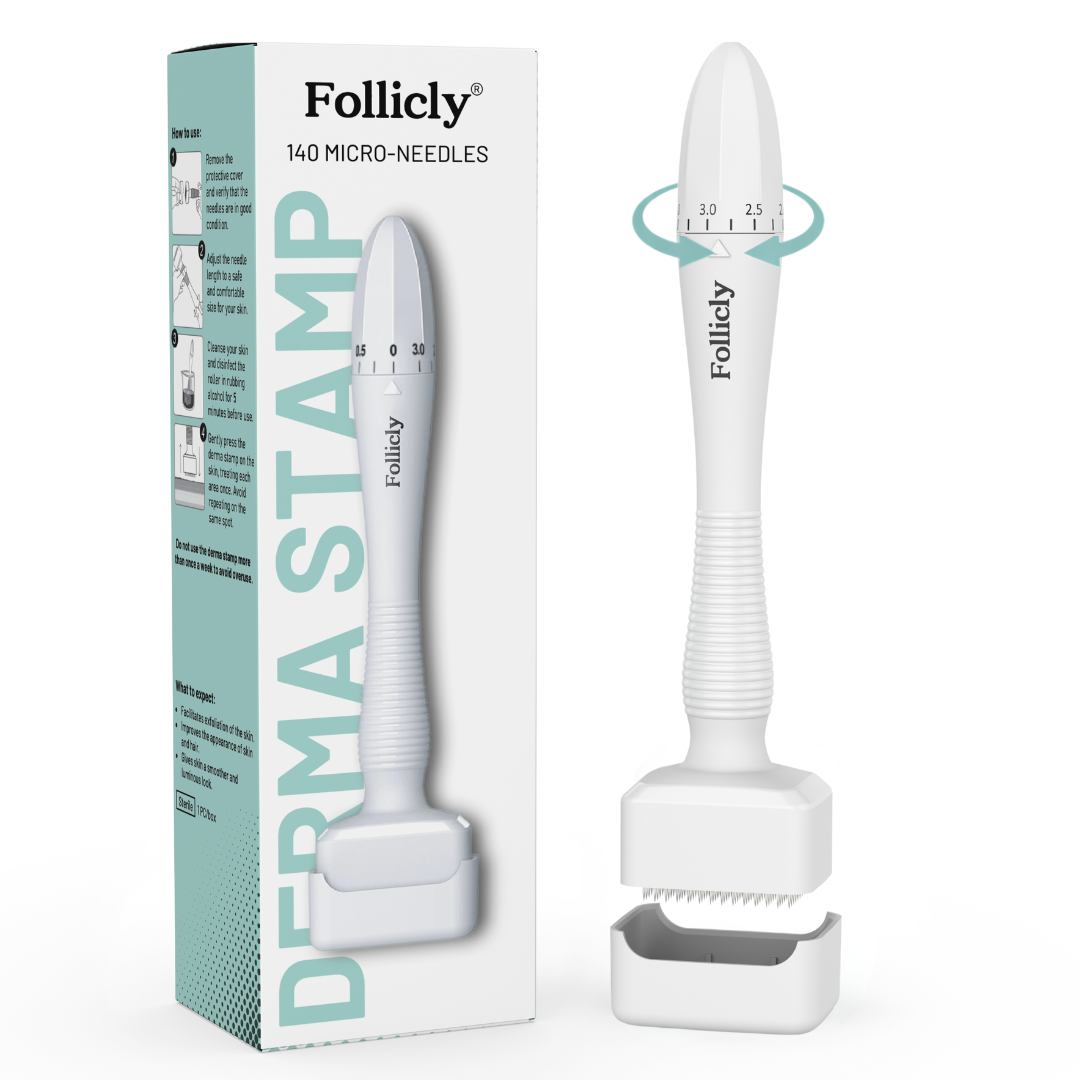
The Follicly Derma Pen is the most comfortable option for sensitive scalps. The motorised oscillation creates cleaner micro-channels with less lateral drag than a roller, and less manual pressure variation than a stamp. The Follicly Derma Stamp is also a good choice — its perpendicular needle entry is gentler than a roller's diagonal drag.
5. Avoid harsh topicals post-needling
If your scalp is sensitive to minoxidil, consider starting with a gentler topical — rosemary oil or a peptide serum — for your first few sessions. Once you've confirmed your scalp tolerates microneedling well, you can introduce minoxidil. See our guide: How to Use Rosemary Oil for Best Hair Results.
6. Patch test first

Before treating your full scalp, do a small patch test on a 2cm² area. Wait 48 hours and assess the response. If redness resolves normally and there's no unusual irritation, proceed with a full session.
7. Extend your aftercare window
If you have a sensitive scalp, extend the post-session restrictions: wait 48 hours (rather than 24) before shampooing, and avoid any potential irritants (fragranced products, alcohol-based tonics) for at least 48 hours post-session. See the full checklist: Scalp Microneedling Aftercare Guide.
Signs Your Scalp Is Reacting Badly

Normal post-session responses include mild redness and tenderness for 24–48 hours. Signs that something is wrong and you should stop and reassess:
- 🔴 Redness or swelling that worsens after 48 hours rather than improving
- 🔴 Intense itching that persists beyond 24 hours
- 🔴 Small pustules or pimples appearing within 24–48 hours (possible folliculitis)
- 🔴 Burning sensation that doesn't subside within a few hours
- 🔴 Spreading redness beyond the treated area
If any of these occur, stop microneedling and consult a dermatologist before resuming.
Sensitive Scalp Protocol: Quick Reference
| Factor | Standard Protocol | Sensitive Scalp Protocol |
|---|---|---|
| Starting depth | 0.5mm | 0.25mm |
| Starting frequency | 2–3x per week | Once per week |
| Pressure | Light to moderate | Very light |
| First topical | Minoxidil | Rosemary oil or peptide serum |
| Shampoo wait | 24 hours | 48 hours |
| Patch test | Optional | Required |
The Bottom Line
A sensitive scalp is not a barrier to microneedling — it's a reason to start more conservatively and progress more slowly. Most people with scalp sensitivity can microneedle safely at 0.25–0.5mm with appropriate frequency and aftercare. The key is listening to your scalp, not pushing through significant irritation, and building up gradually over several weeks.
For tool recommendations, see our full tool comparison guide. For the right needle depth for your goals, see: What Is the Best Microneedling Needle Size for Hair Growth?