
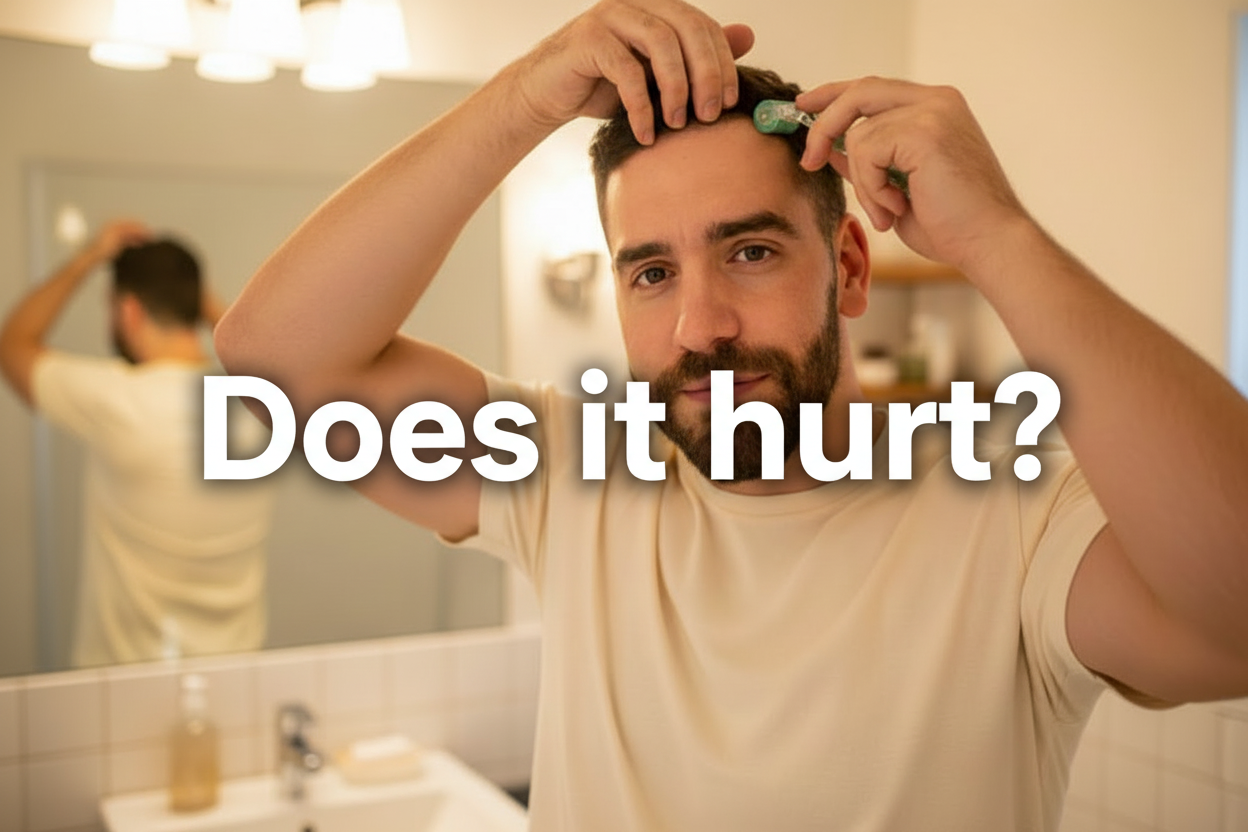
Pain is one of the most common concerns for people considering scalp microneedling for the first time. The honest answer: it depends on the needle depth, your individual pain tolerance, and the tool you're using. Here's a realistic breakdown of what to expect — and how to make each session as comfortable as possible.
The Short Answer
At the depths used for at-home hair loss treatment (0.25mm–1.0mm), most people describe scalp microneedling as uncomfortable rather than painful. It's a prickling or scratching sensation — not sharp pain. The scalp has more nerve endings than many other areas of the body, so it's more sensitive than, say, the thigh — but far less sensitive than the face or neck.
Pain by Needle Depth

0.25mm — Barely Noticeable
At this depth, most people feel almost nothing — a very mild tingling or light scratching sensation. This is the most comfortable depth and is suitable for daily use.
0.5mm — Mild Prickling
The most popular all-round depth. You'll feel a noticeable prickling sensation, particularly over bony areas like the crown. Most people find it very manageable and describe it as similar to a stiff-bristled brush on the scalp.
0.75mm — Moderate Sensation
More noticeable, especially on sensitive areas like the temples and hairline. Some people experience mild stinging. Still well within the tolerance of most users without any numbing.
1.0mm — Noticeable Discomfort
At 1.0mm, the sensation is more pronounced — a sharper prickling that some people find genuinely uncomfortable, particularly on the hairline and temples. Many users apply a topical numbing cream (lidocaine-based) 30–45 minutes before their 1.0mm sessions to reduce discomfort significantly.
1.5mm and Above — Painful Without Numbing
These depths are not recommended for at-home use without professional guidance. They cause significant discomfort and require numbing cream as standard.
Does the Tool Type Affect Pain?
Yes — and this is an underappreciated factor:
- Derma roller: The rolling motion creates lateral drag on the skin, which can feel more uncomfortable than a clean perpendicular entry. Many people find rollers more painful than stamps or pens at the same depth.
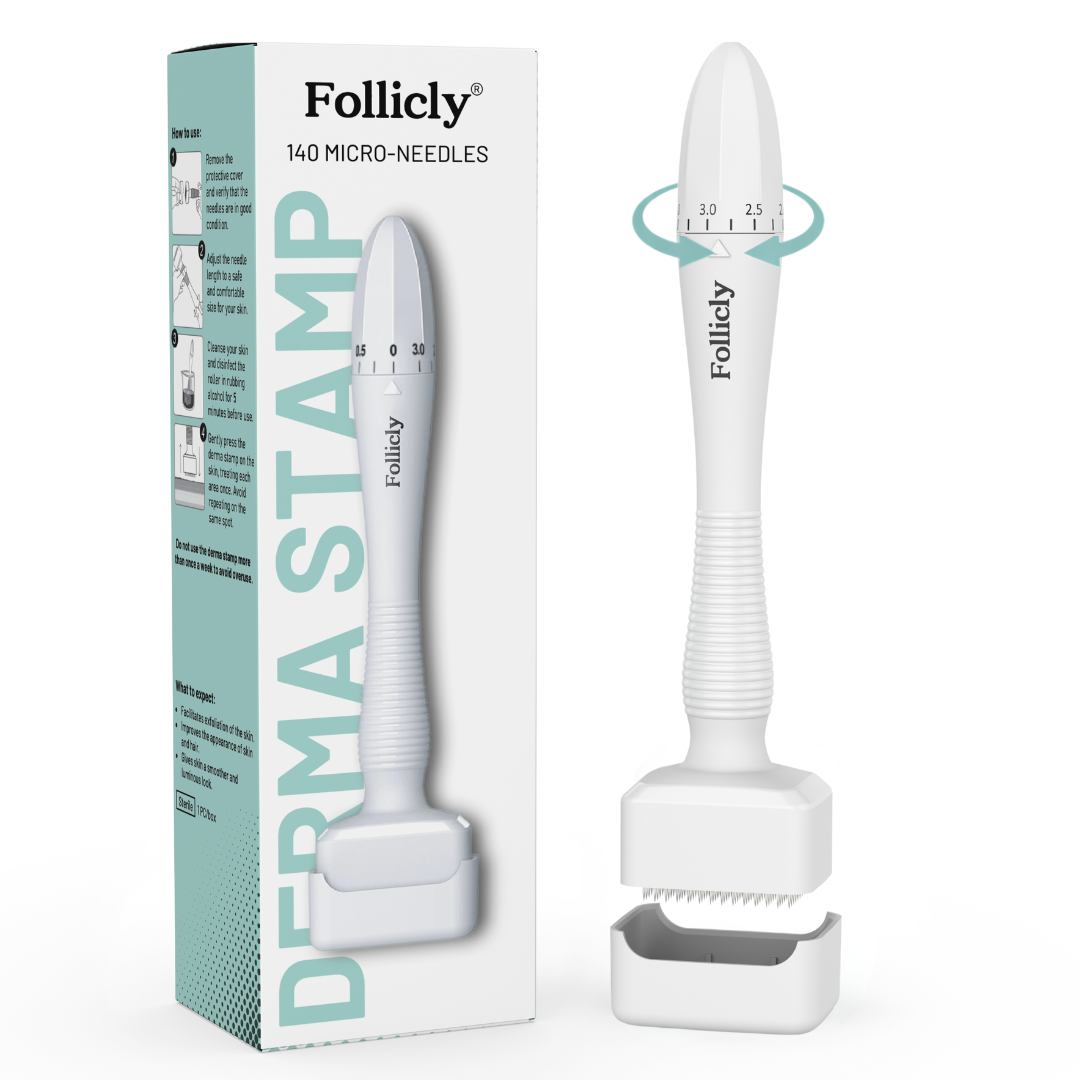
- Derma stamp: The stamping action creates a clean, perpendicular needle entry with no lateral drag. Most users find this noticeably more comfortable than a roller at the same depth.
- Derma pen: The motorised oscillation is typically the most comfortable option. The high-speed needle movement means each individual needle spends less time in the skin, reducing the sensation of each pass.
Areas of the Scalp That Are More Sensitive

Pain is not uniform across the scalp. The most sensitive areas are:
- Temples and hairline: Thinner skin and more nerve endings. Start with lighter pressure here.
- Crown (top of head): Closer to the skull with less subcutaneous tissue. Can feel sharper, especially at deeper depths.
- Nape of the neck: Very sensitive — use lighter pressure and shallower depths.
The sides of the scalp (above the ears) tend to be the least sensitive and are a good place to start if you're new to microneedling.
How to Reduce Discomfort

Use a numbing cream (for 1.0mm+ sessions)
Apply a lidocaine-based topical numbing cream to the scalp 30–45 minutes before your session. Cover with a shower cap to enhance absorption. Wipe off completely before needling — do not needle through numbing cream residue.
Keep needles sharp
Dull needles drag rather than pierce cleanly, significantly increasing discomfort. Replace your cartridge on schedule — see our replacement guide.
Use light, consistent pressure
You don't need to press hard. Let the needle length do the work. Excessive pressure increases pain without improving results.
Work in sections
Divide the scalp into zones and treat one at a time. Taking short breaks between zones gives your scalp a moment to recover and makes the session feel more manageable.
Breathe steadily
Tensing up increases pain perception. Slow, steady breathing during the session makes a noticeable difference.
What About After the Session?

Post-session, the scalp typically feels tender and sensitive — similar to mild sunburn. This is normal and resolves within a few hours (0.5mm) to 48 hours (1.0mm). Avoid touching or scratching the scalp during this window.
For the full aftercare protocol, see: Scalp Microneedling Aftercare Guide.
Pain Tolerance Varies — Start Conservative
If you're new to microneedling, start at 0.5mm and assess your comfort level before moving deeper. There's no benefit to pushing through significant pain — the results at 0.5mm used consistently are excellent, and comfort makes consistency far more likely.
For guidance on which depth is right for your goals, see: What Is the Best Microneedling Needle Size for Hair Growth?